Let the record show that this post will be forever seared into my memory. It has come to this, the only time I can write for this space is when I’m in the process of flying somewhere. I was on a plane from some airport or other (DTW I think) on my way back to ATL. As I was wrapping things up, I clumsily deposited a full cup of coffee on both my laptop and my lap. I was surprised at how many itty-bitty airline cocktail napkins it takes to clean up twenty ounces of café au lait. Just about the time I settled back in, they guy next to me soiled himself. Literally, soiled himself…sitting in the seat next to me. I can only imagine how many cocktail napkins he eventually needed. Needless to say, these things coupled with the torture device that is an airline coach seat, made for an uncomfortable afternoon. I can’t complain though, I went on to arrive safely and on time in CHA where life is good. Moving swiftly on…
I find great joy in teaching architecture history. While I was originally concerned that rehashing the same material semester after semester would get boring, I have found just the opposite to be true. Every time I teach the class I see something in a different way or gain some type of insight. From time to time I even find patterns that are somehow applicable to my current work. After a class on the Renaissance last week, I think I’ve found a parallel with contemporary Chattanooga. (This is probably a stretch, but I’ve decided to try it on anyway. Bear with me.)
When Rome fell, Europe was plunged into the Dark Ages (which always reminds me of perhaps the funniest scene in movie history). While there is plenty to dislike about Roman society and colonial exploits, their administrative framework held western civilization together for hundreds of years (a thousand if you want count the Republic). From an architectural standpoint, this stability and prosperity produced an astounding array of design and engineering marvels. This stability allowed experience and experimentation to develop into a body of knowledge that was passed down from generation to generation. Within a few decades of the fall, the individual and institutional knowledge of architecture and its engineering, craftsmanship, and design was lost. (Note: This is of course in reference to Western Europe. During this period, the Byzantines, essentially successors to the Empire, were producing amazing works such as Aya Sofia.)
In subsequent years, builders were essentially starting from scratch. Design, materials and technique all went back to square one. As opposed to older Roman buildings, Medieval buildings were characterized by thick walls with small windows resulting in small, dimly lit interior spaces. Over time, a number of builders observed older Roman structures and tried to replicate them. The so-called Romanesque style is the result of these efforts. The Romanesque is just that- kind of like the Romans. It may be unfair to say that the thousand years of the dark ages is a millennium-long struggle to regain the lost architectural knowledge of the Romans, but it’s not far off. Grand and well-lit spaces don’t return to Europe until the 12th century with the structural advances of the pointed arch, ribbed vaults, and flying buttresses that characterize the Gothic.
The Dark Ages end with the rise of the humanist philosophy of the Renaissance. This was essentially a rejection of medieval thought in favor of a resuscitation of the lost knowledge of the Romans and Greeks. Humanist artists and thinkers poured through the ancient texts and extant works in an effort to regain what was lost. One could argue that the Renaissance eventually arrives with the baptistery door competition in Florence. Aside from the advance in art by Ghiberti’s win, architecture benefits from the pain of the loser.
After losing the competition, a pissed off Brunelleschi bolts for Rome. He proceeds to spend the next twenty years of his life scrutinizing ancient Roman ruins (and along the way developing linear perspective drawing). Armed with this knowledge he returns to Florence to pitch his ingenious solution to the problem of the Duomo (and in the process serves cold vengeance to his rival Ghiberti). While his solution was new, of the time, and adapted to a contemporary design challenge, there is no doubt that his works owes to those who came many centuries before him.
______
Toward the end of the twentieth century, Chattanooga developed a sophisticated framework for city building. Tremendous works were accomplished based on an understanding of the importance of the public realm, a spirit of partnership and cooperation, and an embrace of inclusive public processes. After a political shift, this framework for building the city dissolved. Many of the people who were well versed in the nuance of partnership were lost or moved away. Those who recognized the importance of public realm design and planning were relegated to the sidelines, and the institutional memory of the organizations that were engaged in the work was lost.
Fortunately, we have begun to emerge from that period and seem to have entered into a more optimistic and exuberant phase. There is great momentum in the city owing to things such as the gig, industrial recruitment, and our entrepreneurial community. While we are gaining momentum in other areas of community life, our work in the built environment lags. This stands to reason as buildings take longer to complete, and the economic environment for development has been soft. While building didn’t come to a standstill during the past decade, we certainly failed to keep pace with both the quality and quantity of what we produced late last century. I also believe it's fair to draw a comparison to the Romanesque- what we’ve done recently tries to evoke the Chattanooga spirit but it hasn’t fulfilled the promise of what we’re capable of.
Of course, comparing medieval Europe with Chattanooga of the early 2000s is a stretch. (you should have seen my hilarious early draft that included analogies for the Inquisition and the Plague). We would be well served, however, by revisiting what worked for us in the past. An incomplete list includes things such as: public/private partnership, an emphasis on quality, demand for authenticity, contextually sensitive design, and the recognition of the vital importance of the public realm. It is not possible or advisable to copy exactly what we did before- the city is in a different place and we face different challenges. If my comparison holds, however, then the parties who are responsible for the stewardship, design and development of the city stand on the cusp of a renaissance.

...on Urban Design in Chattanooga. (and the Big C)
11.03.2014


10.20.2014
59-0
I'm so busy, blah, blah, blah. I don't have time to explore new topics, blah, blah blah. You're tired of reading it, I'm tired of writing it. This week, however, I had it all figured out. We were traveling for a(nother) soccer tournament, and I was set to use that as a jumping off point for a blog post about another city. I have heard many great things about Huntsville, AL. As one of the big four cities in my home state, I was predisposed to believe these things. Growing up in God's Own State, I learned many lessons from my Baba. One such lesson was that if you don't have anything nice to say about something, don't say anything. Keeping that in mind, I offer my thoughts on Huntsville...
On Saturday morning, the youngest and I drove down to Huntsville to rendezvous with the spouse and the oldest who traveled down the night before. While we were there Alabama put on the most dominant display of the college football season. On Sunday we returned to Chattanooga.
Baba taught me a great life lesson, but she did provide much help for my blogging efforts. On the bright side, thankfully my initial blogging idea did not work out as I have something else for you to read. I invited the eminent Trey Wheeler of Cogent Studio to write a guest post for the urbanism space of Benwood's Community Voices. You can find his excellent post here.
On Saturday morning, the youngest and I drove down to Huntsville to rendezvous with the spouse and the oldest who traveled down the night before. While we were there Alabama put on the most dominant display of the college football season. On Sunday we returned to Chattanooga.
Baba taught me a great life lesson, but she did provide much help for my blogging efforts. On the bright side, thankfully my initial blogging idea did not work out as I have something else for you to read. I invited the eminent Trey Wheeler of Cogent Studio to write a guest post for the urbanism space of Benwood's Community Voices. You can find his excellent post here.
10.13.2014
Time Tangent
I love Noel Gallagher, and you know this. I must say, however, that he is officially on my shit list. Monday he had a press conference to announce the impending release and pre-sale of his upcoming album…IN MARCH. C’mon man, that’s six months away. Eh, who are we kidding, he knows I’m going to buy it anyway. At least he teased us with the first song.
Moving swiftly on, it’s probably worth reading any article that refers to brunch as “a symptom of the soulless suburban conformity that is relentlessly colonizing our urban environments.” You can find that here.
If you haven’t already, please read K.Fitzgerald’s excellent post on the Benwood site. Less talk, more action, indeed. I will now pile on and take those thoughts on an urban design tangent.
There is a fundamental disconnect between the nature of a city and the current cult of ________ (fill in the blank with your favorite buzzword such as innovation or disruption. By the way, does any one remember paradigm shift or synergy?) The movers and shakers these days are embracing the characteristics of being lighter, quicker, and more nimble. This seems to be a great approach for many things in business and in life. Unfortunately, city building isn’t really one of them.
Clearly, cities cycle over much longer time frames than the activities that occur within them. The innovation buzz will last for a couple of years before we move on to the next paradigm. The city, however, is pushing 200 years old and continues its deliberate, inexorable march into the future. City building is a slow, cumbersome, and tough process. It requires significant capital resources, there exist physical conditions that can’t be ignored, the internal process has many moving parts, and byzantine layers of bureaucracy and legislation regulate the external process. Making any lasting impact on the built environment requires significant effort.
If you will recall, “Creative Placemaking” was all the rage a couple of years ago. The term occasionally pops up, but as with so many other buzz phrases it has been diluted if not neutered. Although they are tough to define as a body of work, the Creative Placemaking projects essentially attempt to impact the city via lighter/quick/nimble projects. While many of these projects have made some impact, the tend to be transient in nature- when the party is over, so is the imapct. The positive activity in the city is great, but the jury is still out on their lasting impact on the built environment (which by definition must be long-term). We expend a great deal of energy on transient urbanistic projects- and this is fine. These projects can be very cool, but don’t mistake a hammock in a street tree for urban design. There is something to be said for temporary measures to address symptoms. The real work, however, is found in fixing the root of the problem.
Inertia is the blessing and curse of the built environment. A city is patient; it outlasts trends and fads. Even American sub-urbs, a “fad” in the long view, came about after determined and decades-long institutionalization of that philosophy (not to mention a gargantuan resource incentives). There is an opportunity to couple the enthusiasm and expertise of the innovation/disruption set with the process of city building. The challenge is to applying that type of thought consistently over a long period.
Moving swiftly on, it’s probably worth reading any article that refers to brunch as “a symptom of the soulless suburban conformity that is relentlessly colonizing our urban environments.” You can find that here.
If you haven’t already, please read K.Fitzgerald’s excellent post on the Benwood site. Less talk, more action, indeed. I will now pile on and take those thoughts on an urban design tangent.
There is a fundamental disconnect between the nature of a city and the current cult of ________ (fill in the blank with your favorite buzzword such as innovation or disruption. By the way, does any one remember paradigm shift or synergy?) The movers and shakers these days are embracing the characteristics of being lighter, quicker, and more nimble. This seems to be a great approach for many things in business and in life. Unfortunately, city building isn’t really one of them.
Clearly, cities cycle over much longer time frames than the activities that occur within them. The innovation buzz will last for a couple of years before we move on to the next paradigm. The city, however, is pushing 200 years old and continues its deliberate, inexorable march into the future. City building is a slow, cumbersome, and tough process. It requires significant capital resources, there exist physical conditions that can’t be ignored, the internal process has many moving parts, and byzantine layers of bureaucracy and legislation regulate the external process. Making any lasting impact on the built environment requires significant effort.
If you will recall, “Creative Placemaking” was all the rage a couple of years ago. The term occasionally pops up, but as with so many other buzz phrases it has been diluted if not neutered. Although they are tough to define as a body of work, the Creative Placemaking projects essentially attempt to impact the city via lighter/quick/nimble projects. While many of these projects have made some impact, the tend to be transient in nature- when the party is over, so is the imapct. The positive activity in the city is great, but the jury is still out on their lasting impact on the built environment (which by definition must be long-term). We expend a great deal of energy on transient urbanistic projects- and this is fine. These projects can be very cool, but don’t mistake a hammock in a street tree for urban design. There is something to be said for temporary measures to address symptoms. The real work, however, is found in fixing the root of the problem.
Inertia is the blessing and curse of the built environment. A city is patient; it outlasts trends and fads. Even American sub-urbs, a “fad” in the long view, came about after determined and decades-long institutionalization of that philosophy (not to mention a gargantuan resource incentives). There is an opportunity to couple the enthusiasm and expertise of the innovation/disruption set with the process of city building. The challenge is to applying that type of thought consistently over a long period.
10.06.2014
Wheel of Fortune
The ole C.Rushing blog may be in it's death throes. The author finds it exceedingly difficult to come by those once easy hours of free writing time each week. His goal, however, is to make it to the four year anniversary of the page (January 1), and reassess then. Will he make it? Time will tell.
With minutes left before the weekly deadline, I will acknowledge THE urban design issue of the day. Yes, I speak of the riverfront Ferris Wheel. A group of citizens has made a push to install a Ferris Wheel somewhere on the Chattanooga riverfront. Unsurprisingly, the idea seems to be unpopular with many (just read the comment sections of any of the wheel articles).
I see both sides of the argument. On the positive side it is an active public realm improvement that draws people, action and activity to the city. At best, the wheel can be a beautifully designed piece of engineering. Face it, the wheel is fun, and frankly there can't be too much fun in a city.
On the negative side, a lot can go wrong with this one. As one commenter opined, "Ferris wheels are the world record holders for 'most depressing objects once dilapidated'". Unfortunately, cheap traveling carnivals have stigmatized the noble Ferris wheel. When we think Ferris wheel, it conjures images of such places as Panama City, Gatlinburg, and the Northgate Mall parking lot.
Wheel or no wheel, I love the conversation. A group of non-designers thinking about big design moves that have the ability to change the face of the city. Big ideas, big plans, big thoughts- bring it on! Regardless of whether this happens or not, I hope these types of discussions continue.
So, where do I come down? Hmm, it's a tough call. If I had to pick a side, I would probably roll with The Wheel. Although it's probably more fair to say that I'm in favor of something big, vertical and well-designed at the riverfront. If we do go with a wheel, let's just be sure to think more London Eye than Lake Winnie.
Lest you think that there is no conceivable way that I can connect a Ferris Wheel with Louis Sullivan, think again. The original Ferris Wheel was constructed for the World's Columbian Exposition of 1892. The Beaux-Art veneer of the fair derailed budding American architectural expression, and effectively ended Sullivan's career. Later in life, Sullivan reflected on the Exposition: "Meanwhile the virus of the World's Fair, after a period of incubation ... began to show unmistakable signs of the nature of the contagion. There came a violent outbreak of the Classic and the Renaissance in the East, which slowly spread Westward, contaminating all that it touched, both at its source and outward.... By the time the market had been saturated, all sense of reality was gone. In its place, had come deep seated illusions, hallucinations, absence of pupillary reaction to light, absence of knee-reaction-symptoms all of progressive cerebral meningitis; the blanketing of the brain. Thus Architecture died in the land of the free and the home of the brave.... The damage wrought by the World's Fair will last for half a century from its date, if not longer."
With minutes left before the weekly deadline, I will acknowledge THE urban design issue of the day. Yes, I speak of the riverfront Ferris Wheel. A group of citizens has made a push to install a Ferris Wheel somewhere on the Chattanooga riverfront. Unsurprisingly, the idea seems to be unpopular with many (just read the comment sections of any of the wheel articles).
I see both sides of the argument. On the positive side it is an active public realm improvement that draws people, action and activity to the city. At best, the wheel can be a beautifully designed piece of engineering. Face it, the wheel is fun, and frankly there can't be too much fun in a city.
On the negative side, a lot can go wrong with this one. As one commenter opined, "Ferris wheels are the world record holders for 'most depressing objects once dilapidated'". Unfortunately, cheap traveling carnivals have stigmatized the noble Ferris wheel. When we think Ferris wheel, it conjures images of such places as Panama City, Gatlinburg, and the Northgate Mall parking lot.
Wheel or no wheel, I love the conversation. A group of non-designers thinking about big design moves that have the ability to change the face of the city. Big ideas, big plans, big thoughts- bring it on! Regardless of whether this happens or not, I hope these types of discussions continue.
So, where do I come down? Hmm, it's a tough call. If I had to pick a side, I would probably roll with The Wheel. Although it's probably more fair to say that I'm in favor of something big, vertical and well-designed at the riverfront. If we do go with a wheel, let's just be sure to think more London Eye than Lake Winnie.


Lest you think that there is no conceivable way that I can connect a Ferris Wheel with Louis Sullivan, think again. The original Ferris Wheel was constructed for the World's Columbian Exposition of 1892. The Beaux-Art veneer of the fair derailed budding American architectural expression, and effectively ended Sullivan's career. Later in life, Sullivan reflected on the Exposition: "Meanwhile the virus of the World's Fair, after a period of incubation ... began to show unmistakable signs of the nature of the contagion. There came a violent outbreak of the Classic and the Renaissance in the East, which slowly spread Westward, contaminating all that it touched, both at its source and outward.... By the time the market had been saturated, all sense of reality was gone. In its place, had come deep seated illusions, hallucinations, absence of pupillary reaction to light, absence of knee-reaction-symptoms all of progressive cerebral meningitis; the blanketing of the brain. Thus Architecture died in the land of the free and the home of the brave.... The damage wrought by the World's Fair will last for half a century from its date, if not longer."
9.29.2014
Living the Dream
I’m pulling an O.J. Simpson (the airport running version, not the stabby version), doing my best to net get left in Detroit. After sprinting through the concourse, whisking past the gate, and skipping through the jetway, I was aboard and shuffling through first class. The first face I see is none other than my childhood hero, the Human Highlight Film, Dominique Wilkins. The extent to which I idolized the man in my adolescent years cannot be overstated. I stammered some nonsense, shook his hand, and headed back to my seat. After claiming my spot with the unwashed masses back in coach, I posted a quick, exclamatory tweet and settled in for the flight.
While the Summer of Sullivan is over as far as you are concerned, I am still finishing up a couple of obscure biographies of the man. I whipped out one such book to help pass the time, and dug back in. That’s when I saw it, a most extraordinary and implausible thing. I saw a drawing…of a hotel…by Louis Sullivan…that was to be located in the city of CHATTANOOGA! It was dated 1891, the height of the Adler & Sullivan years. In fact, that was the same year as the Wainwright Building, the first truly originally conceived skyscraper. Obviously, the Chattanooga project was never built, but oh what could have been. The hope is unspeakable, but the institution that commissioned this work is still in existence...might there by some long lost Sullivan drawings in town?
The flight landed, and a quick check of my email showed that Dominique Wilkins himself had seen my tweet and responded for the world to see. How sweet is this life. Truth be told, however, this was the second time that I’ve met Dominique. The first was a random encounter at the finish line of a half-Ironman race I did in Orlando back in 2000. Speaking of triathlon...
And if you thought I would let this Ironman weekend pass without a casual reference to my own Ironman race in 2002, you were mistaken. When the Chattanooga race was announced, I was actually pissed off in a petty, jealous sort of way. Upon further reflection, however, I think the locals that compete in a race miss out on the richness of travel and change of routine that can make an event special. Either way, my congratulations to all of the athletes and volunteers, and apologies for the tacks, oil, and dead bodies (wasn't me). Speaking of traveling for sporting events...
I wasn’t able to catch much of the Chattanooga Ironman as the oldest was playing a soccer tourney in exotic East Ridge. He and his CFC U-10 teammates played up in the U-11 age bracket this week and managed to make the finals. Their opponent was none other than the CFC U-11 squad. It was an exciting and hard fought match that culminated in a penalty shoot-out. Despite an up and down tournament, young Rushing stepped up and coolly scored the deciding spot kick to help secure the upset. It was an exciting and apt conclusion to another week of living the dream.
While the Summer of Sullivan is over as far as you are concerned, I am still finishing up a couple of obscure biographies of the man. I whipped out one such book to help pass the time, and dug back in. That’s when I saw it, a most extraordinary and implausible thing. I saw a drawing…of a hotel…by Louis Sullivan…that was to be located in the city of CHATTANOOGA! It was dated 1891, the height of the Adler & Sullivan years. In fact, that was the same year as the Wainwright Building, the first truly originally conceived skyscraper. Obviously, the Chattanooga project was never built, but oh what could have been. The hope is unspeakable, but the institution that commissioned this work is still in existence...might there by some long lost Sullivan drawings in town?
 |
| A Louis Sullivan Design for Chattanooga! Imagine the composition with a cornice more in league with Wainwright. |
The flight landed, and a quick check of my email showed that Dominique Wilkins himself had seen my tweet and responded for the world to see. How sweet is this life. Truth be told, however, this was the second time that I’ve met Dominique. The first was a random encounter at the finish line of a half-Ironman race I did in Orlando back in 2000. Speaking of triathlon...
 |
| My wedding day, the births of my children, and the day that Dominique Wilkins retweeted me... |
 |
| The first time 'Nique had the pleasure of meeting me. |
And if you thought I would let this Ironman weekend pass without a casual reference to my own Ironman race in 2002, you were mistaken. When the Chattanooga race was announced, I was actually pissed off in a petty, jealous sort of way. Upon further reflection, however, I think the locals that compete in a race miss out on the richness of travel and change of routine that can make an event special. Either way, my congratulations to all of the athletes and volunteers, and apologies for the tacks, oil, and dead bodies (wasn't me). Speaking of traveling for sporting events...
 |
| Yes, I did shave my legs for this. |
9.22.2014
All Aboard
As the Summer of Sullivan gives way to the first day of fall, the pace of life is speeding up. In addition to my “real job” and related travels, I’m back to teaching (two sections of) Architecture History at UTC, college football is now in full bloom, and at home my two boys are playing four fall sports. I’m also working on a project with some potential- stay tuned. The speeding train that is life continues to barrel down the track. For these reasons, this week, I will be brief.
Speaking of trains, I’m very excited about the potential inherent in the TIGER grant that the city just received. The initial process and potential project are important for a couple of reasons. First, Chattanooga is forever linked to the railroad. Regardless of what role the railroads play in modern Chattanooga, we are forever linked to the rail in the collective memory of the country (and indeed the world). We have all spoken with visitors who want to know if they can ride the Chattanooga Choo-Choo. How sad for them that there is no regularly scheduled train to take if only for nostalgia’s sake. This process certainly has the potential to provide another level of patina for the city, and to provide a connection to our past.
More importantly, this is an unsurpassed opportunity for reinvesting in our existing urban neighborhoods. The crucial questions are how transit stops are located and how the land around them is developed. This has the potential to be a truly transformative moment for the city. It is a new way to connect employers and employees. It is also a catalyst for the infill of vacant and underutilized property.
So when you read about the TIGER grant, yes it’s about train riding, yes it’s about reclaiming our rail heritage, and yes it carries the baggage of a federal transportation project. It is the underlying potential, however, that is most important.
This potential rail project is not simply about moving people on a train, but it would provide is another choice for getting around town. The promise in this process is not in shunning auto culture in favor of mass transit, but it does represent another didactic example for how to build a healthy city. Indeed this is a transformative economic development opportunity on a grand scale and with it comes the promise of connecting the disadvantaged with opportunity.
Speaking of trains, I’m very excited about the potential inherent in the TIGER grant that the city just received. The initial process and potential project are important for a couple of reasons. First, Chattanooga is forever linked to the railroad. Regardless of what role the railroads play in modern Chattanooga, we are forever linked to the rail in the collective memory of the country (and indeed the world). We have all spoken with visitors who want to know if they can ride the Chattanooga Choo-Choo. How sad for them that there is no regularly scheduled train to take if only for nostalgia’s sake. This process certainly has the potential to provide another level of patina for the city, and to provide a connection to our past.
More importantly, this is an unsurpassed opportunity for reinvesting in our existing urban neighborhoods. The crucial questions are how transit stops are located and how the land around them is developed. This has the potential to be a truly transformative moment for the city. It is a new way to connect employers and employees. It is also a catalyst for the infill of vacant and underutilized property.
So when you read about the TIGER grant, yes it’s about train riding, yes it’s about reclaiming our rail heritage, and yes it carries the baggage of a federal transportation project. It is the underlying potential, however, that is most important.
This potential rail project is not simply about moving people on a train, but it would provide is another choice for getting around town. The promise in this process is not in shunning auto culture in favor of mass transit, but it does represent another didactic example for how to build a healthy city. Indeed this is a transformative economic development opportunity on a grand scale and with it comes the promise of connecting the disadvantaged with opportunity.
9.08.2014
Epilogue
I've left it late this week. More travel, more excuses (Seaside this time). I didn't really have time for this trip, but I’m certainly not complaining. Anyway, when mamma calls I pretty much have to show up. How about a follow-up to the Summer of Sullivan post from last week? No profound observations, just a tough question.
Epilogue:
After leaving the graveyard it was back to the Red Line and a trip downtown. I was a bit ahead of schedule and figured that I would go soak up some atmosphere before heading back out to ORD. I was definitely in a Chicago School frame of mind- the Marquette, the Rookery, the Monadnock, The Reliance, Carson Pirie Scott (again). Situated between Root’s Monadnock and Holabird & Roche’s Marquette is a composition by Mies. His two skyscrapers and postal station are organized around a plaza and Dearborn Street. Y'all know that I love Mies- in fact I paid respects to him at Graceland as well. After soaking up Sullivan all summer, however, I couldn’t help but feel that the space Mies created is bankrupt (in spite of Calder’s flamingo that almost brings life to the space). Perhaps Venturi best summed up my thoughts at the time when he wrote, "less is a bore". Not to worry, I'm sure I'll be back to modernist self in no time.
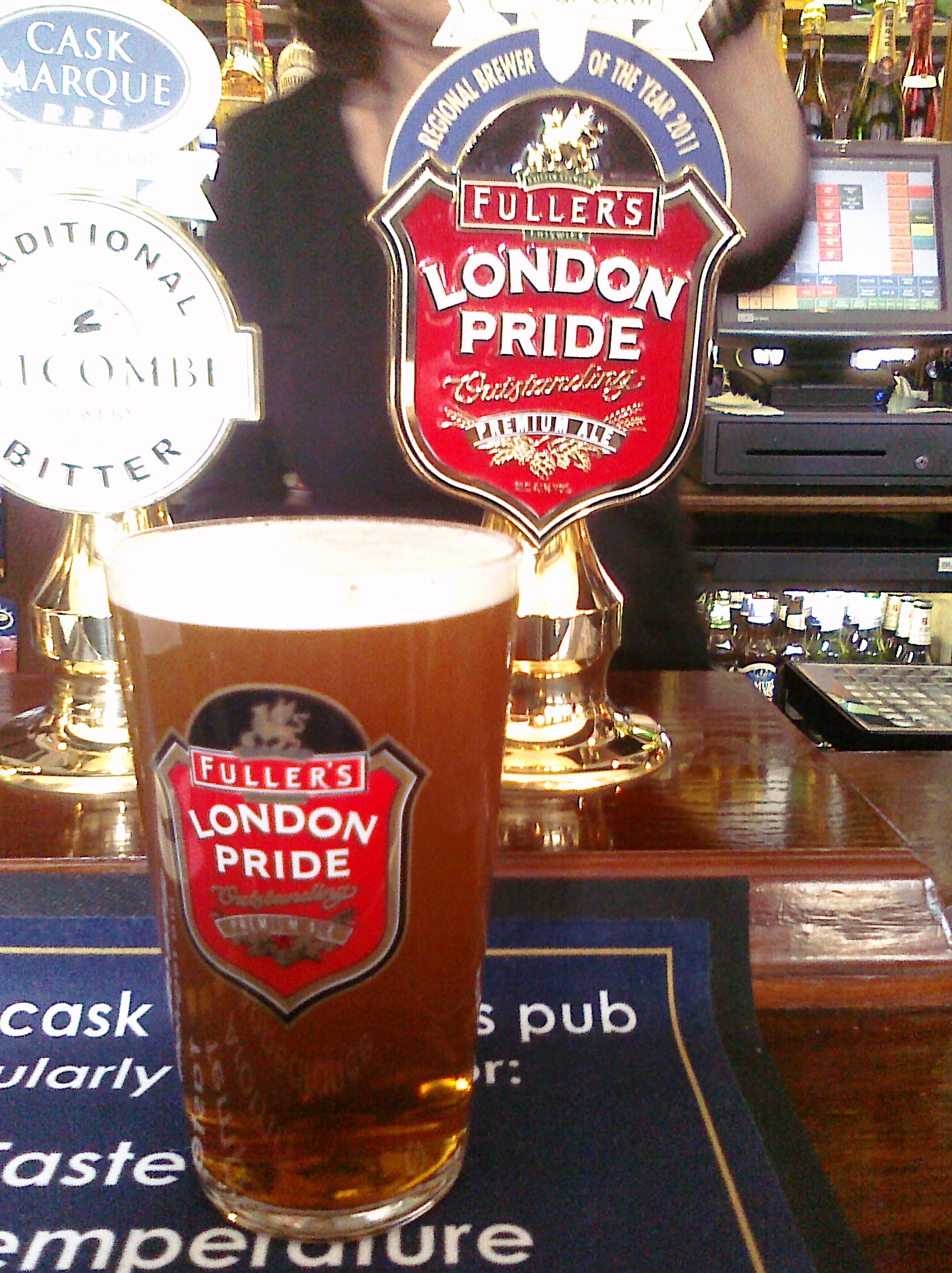
So, naturally, it was off to the pub. After a murderous day of walking (and it was still only 3:30), the London Pride hit the spot. At the bottom of the pint glass I decided that I was not going back to Chattanooga. Why in the world would I leave Chicago? The place has the best architecture in America, superb public transit, excellent public spaces, and arguably the best food in the country. It is a city, a friendly and accessible city.
After the second pint, I admitted that I couldn't really stay in Chicago. I had class to teach the next day, and I was dying to see the family. As for the bigger question, I'm not sure I could actually live in Chicago. My excuses are numerous: I'm basically unemployable outside of Chattanooga, I abhor cold weather, there is no college football there, and it's not The South. But this does raise another question, one that I have no answer to...
If there are things that I value in a city- density, design, activity, transit, food, nightlife- why would I not live in a place with those characteristics? Perhaps more pointedly- should we spend our lives trying to make a place conform to our desires, or should we move to a place that already exhibits those traits? Discuss…
 |
| Not conducive to blog writing. |
After leaving the graveyard it was back to the Red Line and a trip downtown. I was a bit ahead of schedule and figured that I would go soak up some atmosphere before heading back out to ORD. I was definitely in a Chicago School frame of mind- the Marquette, the Rookery, the Monadnock, The Reliance, Carson Pirie Scott (again). Situated between Root’s Monadnock and Holabird & Roche’s Marquette is a composition by Mies. His two skyscrapers and postal station are organized around a plaza and Dearborn Street. Y'all know that I love Mies- in fact I paid respects to him at Graceland as well. After soaking up Sullivan all summer, however, I couldn’t help but feel that the space Mies created is bankrupt (in spite of Calder’s flamingo that almost brings life to the space). Perhaps Venturi best summed up my thoughts at the time when he wrote, "less is a bore". Not to worry, I'm sure I'll be back to modernist self in no time.
 |
| I've still got love for Mies... |
 |
| ...on this day, however, his space did not move me. |
So, naturally, it was off to the pub. After a murderous day of walking (and it was still only 3:30), the London Pride hit the spot. At the bottom of the pint glass I decided that I was not going back to Chattanooga. Why in the world would I leave Chicago? The place has the best architecture in America, superb public transit, excellent public spaces, and arguably the best food in the country. It is a city, a friendly and accessible city.
 |
| Reliance Building by Burnham & Root. Nice, but no Sullivan. |
 |
| The Rookery by Burham & Root. Nice, but no Sullivan. |
After the second pint, I admitted that I couldn't really stay in Chicago. I had class to teach the next day, and I was dying to see the family. As for the bigger question, I'm not sure I could actually live in Chicago. My excuses are numerous: I'm basically unemployable outside of Chattanooga, I abhor cold weather, there is no college football there, and it's not The South. But this does raise another question, one that I have no answer to...
 | |
| The Marquette by Holabird & Roche. Mies' plaza in foreground. |
 |
| The Monadnock by Burham & Root. Root, a Southerner, checked out at 41. Way too early, what potential. |
Subscribe to:
Posts (Atom)